
Categories
Home Buying, Florida Home Insurance, Southwest Florida Real EstatePublished September 22, 2026
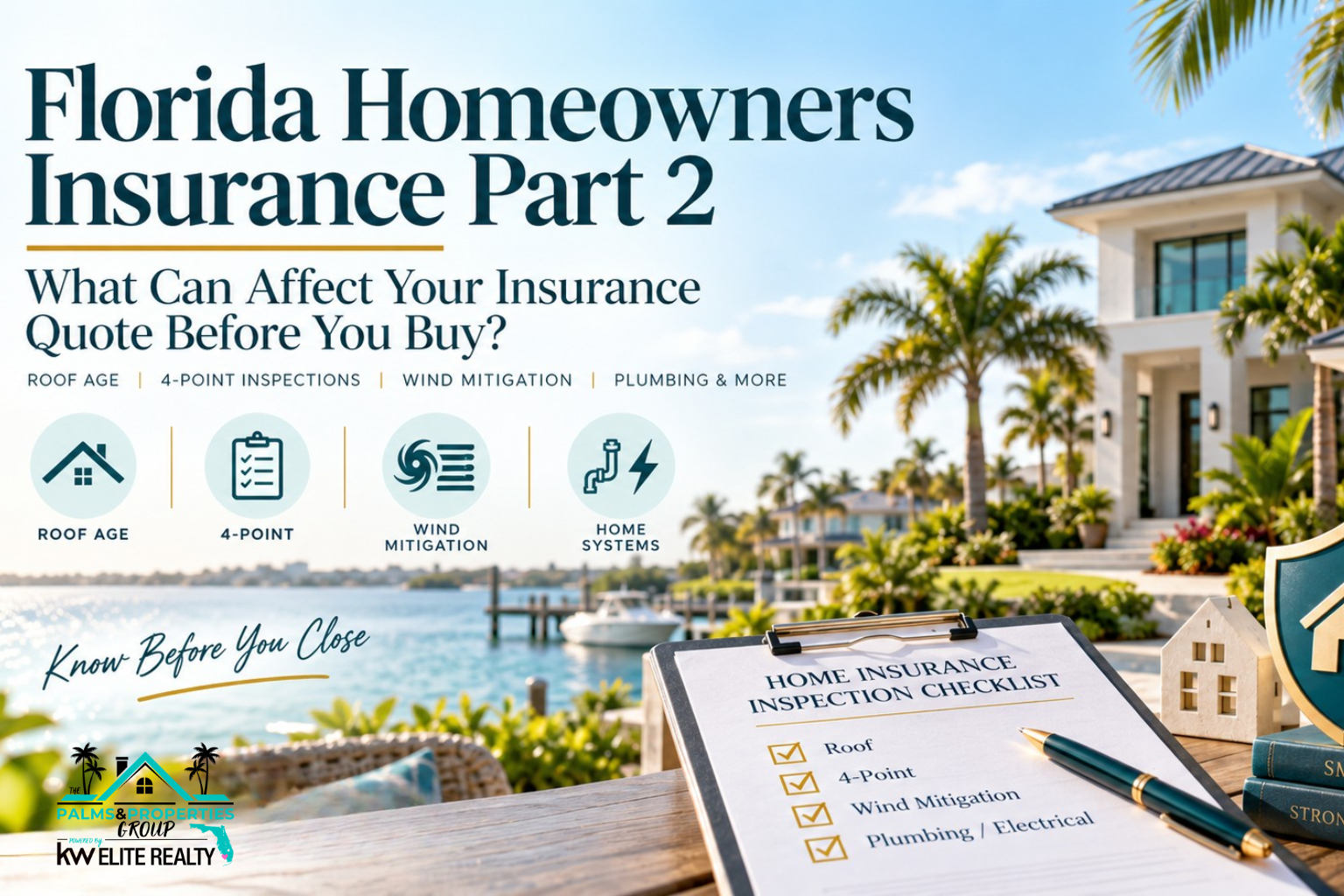
Florida Homeowners Insurance Part 2: What Can Affect Your Insurance Quote Before You Buy?

So, you found a home in Southwest Florida that you love.
The kitchen is beautiful. The pool is calling your name. The neighborhood feels right.
Then you call for an insurance quote.
And suddenly you're hearing things like:
“How old is the roof?”
“Do you have a wind mitigation?”
“We need a 4-point inspection.”
“What kind of plumbing does the house have?”
Welcome to buying a home in Florida. 🌴
In my first Florida homeowners insurance guide, I talked about what buyers should compare once they receive insurance quotes — things like hurricane deductibles, water damage, mold coverage, ordinance and law, roof coverage and flood insurance.
But there's another side of the conversation:
What about the HOUSE can affect your insurance quote in the first place?
That's what we're talking about today.
If you're buying a home in Fort Myers, Cape Coral, Estero, Bonita Springs, Naples or anywhere in Southwest Florida, these are some of the things you want to understand before you get too far into the process.
1. The Age and Condition of the Roof Matter
If there's one thing Florida buyers hear about over and over again, it's the roof.
And for good reason.
The age, condition, material and remaining useful life of a roof can all become part of the insurance conversation.
An older roof doesn't automatically mean you shouldn't buy the home.
But you DO want to know what you're dealing with.
Before buying, find out:
- When was the roof installed?
- What type of roof is it?
- Is there documentation or a permit?
- Has it been repaired?
- Does the inspector see any damage or deterioration?
- How does the insurance company view the roof?
- Will the roof affect your premium or eligibility for coverage?
- How will a future roof claim be settled?
This is also why I don't love waiting until the last minute to get an insurance quote.
A house can look beautiful cosmetically and still have a roof issue that changes the entire insurance picture.
2. What Is a 4-Point Inspection in Florida?
If you're buying an older home in Florida, don't be surprised if an insurance company asks for a 4-point inspection.
A 4-point inspection generally focuses on four major systems:
Roof
The inspector looks at the age and condition of the roof and may estimate its remaining useful life.
Electrical
The inspection looks at the electrical system, wiring and panel.
Plumbing
The inspector identifies visible plumbing materials and looks for certain conditions, leaks or concerns.
HVAC
The heating and air-conditioning system is reviewed for age and general condition.
Florida's Department of Financial Services notes that an insurer may request a 4-point inspection when insuring an older home, and failing to provide a requested inspection can affect whether certain coverage is offered or whether the property is insured.
Here's the important part for buyers:
A regular home inspection and a 4-point inspection are not necessarily the same thing.
Your general home inspection is designed to help you understand the overall condition of the property.
The 4-point is much more focused on the systems the insurance company wants information about.
So when you're scheduling inspections, ask your inspector whether you also need a 4-point report for insurance.
It can save you from scrambling later.
3. What Is a Wind Mitigation Inspection?
This is another phrase you're going to hear a LOT when buying a home in Florida.
A wind mitigation inspection looks at certain construction features designed to help a home withstand windstorm damage.
Depending on the home, the inspection can document things such as:
- Roof shape
- Roof-to-wall connections
- Roof deck attachment
- Roof covering
- Secondary water resistance
- Window and door protection
- Hurricane shutters
- Impact-rated openings
Why does this matter?
Because certain wind-resistant features can qualify a property for insurance credits or discounts.
Florida law requires residential insurance rate filings to account for qualifying windstorm mitigation features, including features related to roof strength, roof-to-wall connections and opening protection.
That means two similar homes could potentially have very different insurance costs depending on how they're constructed and protected.
And here's something buyers sometimes miss:
A house having hurricane shutters doesn't necessarily tell you the whole story.
The wind mitigation inspection documents the specific features the insurance company uses when determining applicable credits.
4. Hurricane Shutters and Impact Windows Can Matter
This one is especially relevant in Southwest Florida.
If a home has:
- Impact windows
- Impact doors
- Accordion shutters
- Roll-down shutters
- Panels
- Other approved opening protection
get the documentation.
Don't assume the insurance company will simply look at the house and give you credit.
A wind mitigation inspection is typically used to document qualifying features for the insurer.
If the seller says:
“Yes, all of the windows are impact.”
Great.
Now let's verify it.
When were they installed?
Were permits pulled?
Are ALL openings protected, or only some of them?
What about the garage door?
What about glass doors?
Documentation matters.
5. Plumbing Can Affect More Than Your Home Inspection
When buyers think about plumbing, they usually think:
Does anything leak?
Your insurance company may be looking at a bigger picture.
Depending on the home and carrier, the insurer may want information about:
- Plumbing material
- Age of the plumbing
- Evidence of leaks
- Previous repairs
- Water heater condition
- Updates to the system
Florida DFS specifically notes that an insurance agent may request documentation showing updates to plumbing, wiring, or HVAC systems during the insurance process.
This is particularly worth investigating when you're buying an older Southwest Florida home.
And it ties directly back to what we talked about in Part 1:
Water damage coverage.
You want to understand BOTH the condition of the home's plumbing and what the insurance policy would actually cover if you had a future water loss.
6. Electrical Systems Can Become an Insurance Issue
Electrical is another one of those things buyers don't always think about until the inspector or insurance company brings it up.
The insurer may want to know about:
- The electrical panel
- Wiring type
- System updates
- Overall condition
- Potential fire hazards
Florida DFS notes that underwriting inspections can include checking wiring and electrical panels that an insurer believes may increase fire risk.
Again, this doesn't automatically mean an older home is a bad home.
It means you want the information before closing, not afterward.
7. HVAC Age and Condition Can Be Part of the Picture
Your air conditioner is already a pretty important part of life in Florida. 😅
But the HVAC system can also be one of the items reviewed during a 4-point inspection.
Find out:
- How old is the system?
- Has it been serviced?
- Is it functioning properly?
- Is there visible damage or corrosion?
- Has the system been replaced or updated?
Even aside from insurance, this is information you want as a buyer because replacing an HVAC system shortly after closing is probably not the housewarming gift you had in mind.
8. Don't Ignore Previous Damage or Unfinished Repairs
This one is a big deal.
If there was previous hurricane damage, water intrusion, roof damage or another significant issue, find out:
What happened?
Was it repaired?
Who completed the repairs?
Were permits required and closed?
Is there documentation?
An insurance underwriting inspection may look at whether a property has unrepaired damage or other maintenance issues when determining whether the insurer wants to accept the risk.
This is why documentation can be so valuable when purchasing a Florida home.
Receipts.
Permits.
Roof records.
Window permits.
Repair invoices.
Wind mitigation reports.
Previous inspections.
Keep it all.
9. The Pool and Pool Cage Deserve Attention Too
Southwest Florida buyers LOVE their pools.
I get it.
But when you're comparing homes, especially after everything we've experienced with hurricanes in this area, don't forget about the structure around that beautiful pool.
Look at:
- Condition of the pool cage
- Screens
- Fasteners and framing
- Pool equipment
- Previous storm damage
- Repairs
- Insurance limitations
Then go back to your insurance quote and ask:
Exactly what is covered if that pool enclosure is damaged during a storm?
Don't assume.
This is one of those areas where reading the actual coverage matters.
10. Flood Zone and Homeowners Insurance Are Two Different Conversations
I said this in Part 1, and I'll keep saying it:
Homeowners insurance and flood insurance are not the same thing.
When you're considering a home in Southwest Florida, make sure you're looking at the flood conversation separately.
And please don't stop at:
“The lender doesn't require flood insurance.”
That tells you what the lender requires.
It doesn't necessarily tell you everything you may want to know about your own risk tolerance.
For buyers, I like to look at:
- The property's flood zone
- Available elevation information
- Whether flood insurance is required
- What a flood policy may cost
- Prior flooding or water intrusion that is disclosed or otherwise identified during due diligence
- The buyer's comfort level with the property's location and exposure
Get the information.
Then make the decision that's right for you.
11. Get an Insurance Quote EARLY
If you've made it this far, this is probably the biggest takeaway.
Don't wait until three days before closing to find out what your insurance is going to cost.
Insurance can affect:
- Your monthly housing payment
- Cash needed at closing
- Your lender's qualification calculations
- Whether certain repairs need to be made
- Which insurance carriers may be available
- Your overall comfort level with the home
When possible, start the insurance conversation during your inspection and due-diligence period.
That's when you still have time to gather information, ask questions and understand what you're buying.
The Documents I Love to See When Buying a Florida Home
If they're available, these can be helpful to gather during the transaction:
- Current or previous wind mitigation inspection
- 4-point inspection
- Roof permit
- Roof replacement invoice
- Impact window and door permits
- Hurricane shutter documentation
- Plumbing update records
- Electrical update records
- HVAC replacement information
- Previous insurance information when available
- Flood documentation
- Repair permits and invoices
Not every home is going to have a perfect folder with every document neatly organized.
Wouldn't that be nice?
But the more information we can gather, the better questions we can ask.
My Advice to Southwest Florida Buyers
When you're buying a house here, don't look at insurance as something that happens after you choose the home.
Make it part of your due diligence.
Before you get emotionally attached to the gorgeous pool and that perfect lanai, find out:
How old is the roof?
Do we need a 4-point?
Is there a wind mitigation report?
Are those impact windows documented?
What kind of plumbing is in the house?
What's the flood situation?
And what is this house actually going to cost to insure?
Those aren't the fun questions.
But they can be some of the most important ones.
Buying a Home in Southwest Florida?
Buying in Florida comes with a few extra layers, and that's exactly why having someone who understands the local process matters.
From insurance and inspections to flood zones, roofs, HOAs, financing and everything that happens between showing day and closing day, my goal is to help you know what questions to ask BEFORE something becomes a surprise.
If you're considering a home in Fort Myers, Cape Coral, Estero, Bonita Springs, Naples or the surrounding Southwest Florida area, I'd love to help.
Kayla Hunter, REALTOR®
Palms & Properties Group
Keller Williams Elite Realty
📱 239-850-7719
✉️ KaylaHunterRealty@gmail.com
🌴 www.PalmsAndProperties.com
Missed Part 1?
Read: Florida Homeowners Insurance: What Southwest Florida Home Buyers Need to Compare
https://www.palmsandpropertiesflorida.com/blog/florida-homeowners-insurance-what-southwest-florida-home-buyers-need-to-compare-if-youre-buying-a-home-in-southwest-florida-homeowne
Kayla Hunter
SW Florida Native & Realtor® | The Palms & Properties Group | Keller Williams Elite Realty
or another way